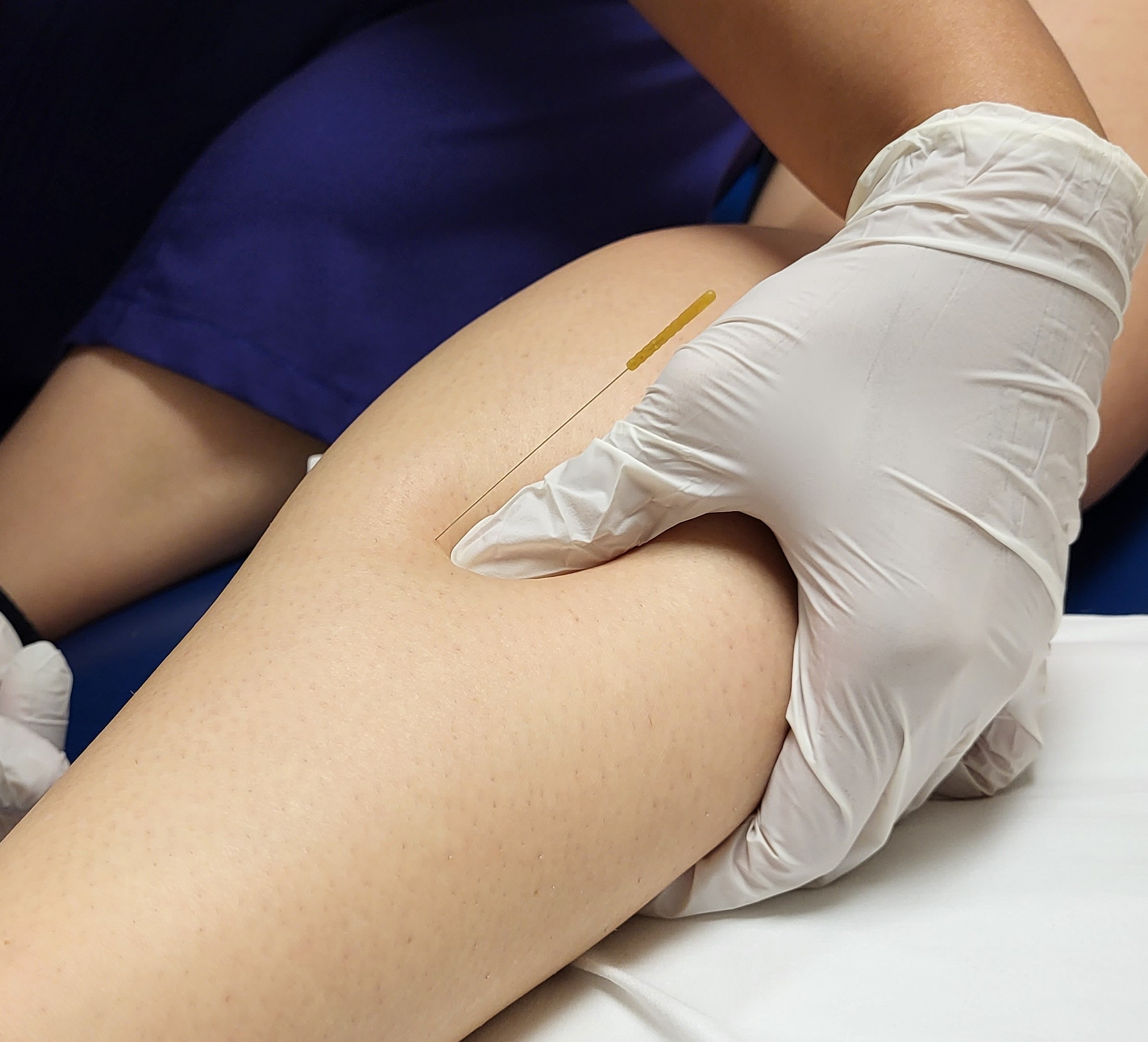
The Medical Definition:
Dry needling is an evidence-based treatment technique that uses thin, solid needles to penetrate the skin and stimulate underlying myofascial trigger points, muscular and connective tissues for the management of neuromusculoskeletal pain and movement impairments.
What you need to know:
Trigger points, or "muscle knots" are tight bands of muscle that are getting an incorrect signal to contract or "tighten" from your brain. This can be due to muscle imbalances, poor posture, poor sleeping position, nerve injury, or overuse of muscles.
Dry Needling is able to loosen those deep, hard to reach/release muscles that can ruin your sleep quality, cause headaches, and stop you from doing the things you want to do. We use thin needles, about the thickness of a coarse hair, to reach those muscles and cause a "twitch response." This response is essentially a muscle spasm that contracts the muscle, and then fully relaxes it. Patients will remark that this is one of the fastest ways to loosen tight muscles without taking muscle relaxers. We will also then provide recommendations for stretches and strengthening to correct muscle imbalances to reduce the risk of those areas tightening up in the future.
Please note that we are cash based and do not accept insurance at this time
There are several different types of needling based treatments. Most use similar size and type of needles, but they have different benefits and uses!
Dry Needling is very specific and precise to the area where you have pain and typically does not impact areas beyond the treatment area. There are some exceptions, but if you're getting Dry Needling for tightness in your back, then the treatment area will be on or around the muscles that impact your back. This typically results in less needles overall, and there will be less overall time that the needles will be inserted. We also typically suggest a few exercises to reduce the movement pattern that caused the tightness to begin with. Dry needling aims to cause a muscle twitch response which is essentially a muscle spasm that can be uncomfortable but causes the target muscle to completely relax afterwards.
Acupuncture is a more holistic treatment approach based on eastern medicine. This technique follows energy meridians, and connections around your whole body. In that same example of back tightness, needles may be placed at remote areas from your back such as hands, feet, head. The goal may be to also address things the digestive system and other organ systems that are not directly attached to the back. This means more needles, and more time the needles will be placed while you wait for the treatment effect. Acupuncture typically has little to no discomfort, there is no twitch response in the muscles that are addressed.
(This description was not written by someone who performs acupuncture and is based on textbook descriptions of the procedure. The experience of patients that have experienced both acupuncture and dry needling were also used to formulate the example of needle placement for low back tightness. For more information about acupuncture please contact your local acupuncturist.)
Whether it's for muscular pain, tendinopathy, or sciatica; dry needling muscles has the primary goal to reduce tightness and improve pain. This is commonly utilized for athletes, and desk workers alike to address tightness, stiffness, and muscle spasms. It can help with issues such as: tight muscles, muscle knots, neck pain relief, back muscle spasms, muscle strains, and trigger point pain
Tension headaches can be due to tightness in the muscles of the head and neck. Relieving the tightness can be a game changer for headache sufferers. During your evaluation, it will be determined if tight muscles are a potential cause of your headaches and they will be addressed in the same session. You will be able to see some change immediately, and within 24 hours see if tightness in your muscles has been impacting your headache. Sometimes headaches can start after an event such as: post concussion, or after whiplash. But a large portion of headache suffers have no specific cause. Found out if your headache can be treated at the source today without taking additional medications.
Have limited mobility after a surgery, or an injury with a laceration? Scar tissue can be made more mobile to improve appearance, and pain around the incision with Dry Needling. The scar must be fully healed (3 months from injury) to reduce risk of infection, but otherwise improvements in scar tissue have been seen with dry needling up to decades after the injury. However, the older the scar, the more treatment sessions are required.
Spasticity can limit how well you can move after a neurologic event such as: stroke, brain injury, spinal cord injury, or Multiple Sclerosis. If you are actively pursuing therapy but need a boost to your range of motion, dry needling may be the right adjunct for you.
Use of electrode pads or a thin needle to stimulate the same nerve roots that impact Overactive Bladder Syndrome. This is an evidence-based treatment to reduce urinary frequency and incontinence that benefits those with neurogenic and non-neurogenic overactive bladder syndrome. For more information click here.